
How to recognize signs of discomfort in more reserved dogs
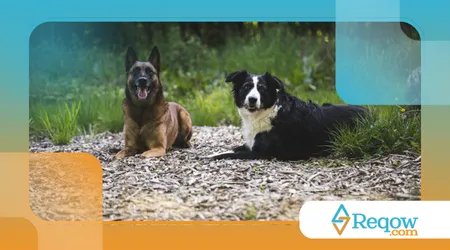
Identify Signs of discomfort in more reserved dogs. It requires more than a casual glance; it demands a kind of emotional literacy that many tutors, even the most dedicated, still do not fully master.
Advertisements
Unlike a dog that barks or lunges—noisy behaviors that are impossible to ignore—an introverted animal suffers internally.
He communicates his limits through postural whispers that, if ignored, silence his trust in the environment and in the person guiding him.
This guide proposes an immersion in practical ethology so that you can learn to read between the lines of your dog's behavior.
Table of Contents
- The myth of "calmness" in introverted dogs.
- The subtle grammar of discomfort: from gaze to rigidity.
- Managing space as a sign of respect.
- The threshold between shyness and trauma.
- Signal matrix: deciphering body tension.
- Final reflection and FAQ.
What defines the temperament of a reserved dog?
It's not just about "being quiet." A reserved dog operates under a sensory processing system that prioritizes analysis before action.
Advertisements
Often, this temperament is a mosaic that blends genetic predisposition and the weight of past experiences, shaping an individual who views the world with an almost analytical caution.
There's something unsettling about how these dogs are often labeled "good boys" simply because they don't react in an expansive way.
In fact, the reserve is a self-preservation strategy. The dog is not necessarily relaxed; it is monitoring its surroundings from a blind spot, calculating the necessary distance to remain safe without needing to engage in direct conflict.
What are the main signs of discomfort in more reserved dogs?
The biggest mistake is waiting for a growl. In animals with this profile, discomfort manifests in microexpressions: a sideways glance, a quick lick of the snout that's too fast to be hunger, or that yawn that appears in the middle of an unwanted hug.
These are appeasement mechanisms, a polite attempt — in canine etiquette — to say that the situation is uncomfortable.
Immobility is another sign that is often misinterpreted. When a dog “freezes” while a child pets it, it is rarely acceptance; more often than not, it is the phenomenon of stress paralysis. Observing the tension at the corner of the mouth and the firm closure of the mouth offers valuable clues about what is occurring beneath the surface of that stillness.
Why is personal space vital for introverted animals?
Every dog has a "critical distance," but for a reserved dog, this bubble is sacred. When we invade this space uninvited, we force the animal into a binary choice: endure the stress to exhaustion or react defensively.
Respecting this safety zone is what separates harmonious coexistence from a potential domestic accident.
Predictability is what brings peace to these individuals. Knowing that there is a refuge—a corner of the room or a carrier—where no one will touch them is the greatest positive reinforcement you can offer.
++ How to deal with dogs that become more sensitive during festive seasons.
It's about giving the dog control over its own social exposure, something essential for the Signs of discomfort in more reserved dogs. Don't escalate into panic.
How can you differentiate between fear and natural shyness in everyday life?
Shyness is a personality trait, a way of navigating the world. Fear, on the other hand, is a physiological storm.
A shy dog may take a while to approach a visitor, but it remains curious.
A cornered dog exhibits dilated pupils, sweating paws, and a cognitive disconnect from its environment; it stops learning because it is too busy trying to survive.
Understanding this distinction prevents tutors from trying to "force socialization," which usually makes the situation worse.
To understand the scientific basis of these emotional states, the guidelines of WSAVA – World Small Animal Veterinary Association They offer a technical overview of how stress impacts the nervous system of small animals, validating that mental health is inseparable from physical health.
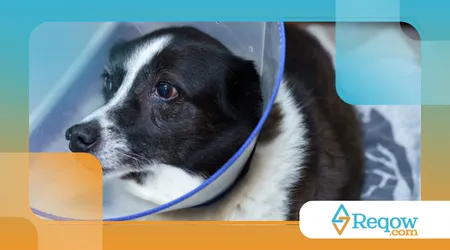
Interpretation Matrix: The Language of Discomfort
The table below organizes the chaotic canine reactions to facilitate your daily understanding when handling these animals.
| Voltage Level | Typical Physical Manifestation | What is the dog communicating? |
| Subtle | Repetitive yawning, "lanking" (licking the air) | "I'm trying to calm down here." |
| Moderate | Fixed gaze to the side, body tilted. | "Please don't come any closer." |
| Severe | Hidden tail, arching of the back | "I'm panicking and there's no way out." |
| Critical | Total muscle rigidity, retracted lip | "I'll need to defend myself now." |
The invisible marks of prolonged stress.
Living under constant pressure alters a dog's brain chemistry. When cortisol is not released, it becomes toxic, affecting everything from digestion to coat quality.
It is common for animals that hide their feelings to develop psychogenic licking — those wounds on their paws that seem to have no physical cause, but are purely a reflection of repressed anxiety.
Neglecting the emotional well-being of a reserved pet is, in a way, a failure in basic care.
Find out more: The importance of rest after stimulating exercise sessions.
A dog that doesn't feel safe expressing discomfort ends up living in a state of "learned helplessness," where it gives up on communicating. This is the opposite of a balanced dog; it's an animal that has broken down emotionally.
When does professional intervention become the solution?
If your daily life has become a minefield where any noise or approach triggers a reaction of retreat, it's time to seek specialized help.
An ethologist or trainer focused on animal welfare can design a desensitization plan that respects the animal's pace, without rushing things.
The focus should never be on "fixing" the dog to make it extroverted, but rather on giving it the tools so that the presence of strangers or changes in routine are not perceived as existential threats.
++ Basic dog care tips to prevent odors in your pet's living area.
The science of animal behavior has evolved enough for us to know that punishment only buries the problem deeper; positive reinforcement, on the other hand, builds bridges of trust.
The architecture of a safe environment
Creating a home for a reserved dog requires an interior design focused on psychological safety. Unobstructed escape routes, where the animal can move around without being unintentionally touched, are a game-changer.
Furthermore, educating visitors not to look directly into the dog's eyes and to let the dog initiate contact is a golden rule that saves the animal immense stress.
By adjusting these small gears in the dynamics of the house, you drastically reduce how often the animal needs to express stress.
The reserved dog's silence ceases to be an enigma and becomes simply a reflection of an individual who feels understood.
For a deep dive into veterinary physiology and biological responses to stress, the Merck Veterinary Manual It is the definitive reference.

Empathy as the strongest bond
Respecting the nature of a dog that doesn't want to be the center of attention is one of the purest forms of care.
Ultimately, our role as guardians is not to mold the animal to our social desires, but to be the safe haven where it can be exactly who it is, with all its caution and silences.
Frequently Asked Questions (FAQ)
How do you differentiate between natural pain and physical pain?
Pain is often accompanied by sudden changes. If the dog was reserved but allowed affection and now avoids it or complains, the cause is probably clinical and not behavioral.
My dog has never growled, could he bite out of nowhere?
No bite comes "out of nowhere." Reserved dogs often give off many subtle signals before resorting to aggression. If these signals are systematically ignored, biting becomes the only voice the animal has left.
Can I train a reserved dog to be more friendly?
You can train him to be more confident and tolerant, but his reserved nature is part of his personality. The goal should be the animal's comfort, not turning him into a "promotional dog."
What should I do when someone tries to force interaction with my dog?
Be your pet's advocate. Interrupt the interaction and explain that he needs space. Protecting your dog in these moments strengthens the trust he has in you.